
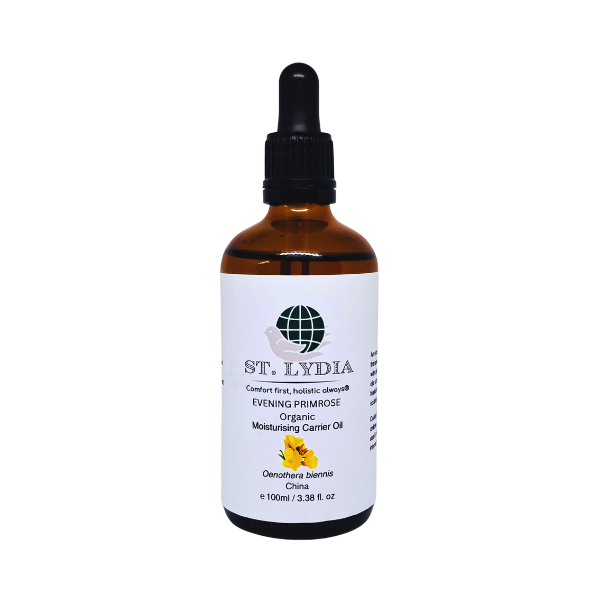


Evening Primrose Organic Oil (Oenothera biennis) – China
€13.00
💰 VAT Included. 📦 Shipping calculated at checkout.
📦 🚚 Free nationwide delivery on orders over €60
Description
Evening Primrose Organic Oil
***Evening Primrose Organic Oil – History***
Evening primrose organic oil is extracted from the seeds of the evening primrose flowers, scientifically known as Oenothera biennis plant. Native to eastern and central North America, from Newfoundland west to Alberta, southeast to Florida, and southwest to Texas, and widely naturalised elsewhere in temperate and subtropical regions. It is especially valued for its high content of gamma-linolenic acid (GLA), an omega-6 essential fatty acid. The native American tribes held this plant in high regard and utilised its entirety—leaves, roots, and seeds—for medicinal purposes. It was used in the treatment of wounds, bruises, sore throats, skin ailments, and gastrointestinal disorders, long before modern oil extraction methods existed!
In the early 17th century, European settlers reintroduced Oenothera biennis seeds to England and continental Europe. Initially, the plant was primarily cultivated as a novelty and ornamental species. In Europe, it acquired the nickname “King’s Cure-All” due to its extensive range of purported medicinal applications. During the 17th and 18th centuries, it became an integral component of herbal medicine practices.
In the early 20th century, scientists commenced identifying fatty acids within plants, comprehending their pivotal role in human health. In the 1970s, evening primrose oil (EPO) garnered significant attention when researchers isolated its high concentration of gamma-linolenic acid (GLA). GLA was subsequently discovered to possess anti-inflammatory and hormonal-regulating properties. Consequently, supplements were manufactured in capsule form, targeting conditions such as eczema, premenstrual syndrome (PMS), and rheumatoid arthritis. By the 1980s and 1990s, EPO had established itself as a mainstream alternative health supplement across Europe, the United States, and Asia.
Throughout the 1980s, numerous studies were conducted to validate both traditional and modern claims regarding EPO. While some clinical trials provided evidence of benefits, particularly for eczema and PMS, others revealed limited or non-detectable effects in comparison to placebo. Despite ongoing scientific debate, evening primrose oil continues to enjoy widespread popularity, particularly within natural and integrative medicine circles.
***Evening Primrose Organic Oil – Benefits***
Evening primrose organic oil is an exceptional, nourishing, and therapeutic carrier oil for aromatherapy. It is particularly suitable for hormonal balance, skin healing, and emotional calming. Evening primrose organic oil blends harmoniously with calming, regenerative essential oils such as lavender, chamomile, frankincense, or rose to create skin-soothing blends. Its light aroma complements essential oils without overpowering them.
Evening primrose organic oil is often used to moisturise and enhance skin elasticity, making it beneficial for eczema, dry skin, inflammation, and anti-aging blends due to its rich gamma-linolenic acid (GLA) content. Evening primrose organic oil strengthens and heals damaged skin, and it is incorporated into facial oils in aromatherapy skincare to target fine lines, dry patches, and sensitive skin issues.
Given its lightweight texture and anti-inflammatory properties, Evening primrose organic oil is frequently incorporated into custom massage oils for hormonal balance, menstrual pain relief, and stress reduction when paired with calming essential oils. Evening primrose organic oil penetrates the skin easily without leaving a heavy residue, making it beneficial for rheumatoid arthritis and general inflammation. Evening primrose organic oil can be added to shampoo or massaged directly into the scalp to reduce flakiness and improve hair health. However, due to its delicate nature, evening primrose organic oil can oxidise (go rancid) relatively quickly. To extend its shelf life when creating blends, it is advisable to add vitamin E (natural tocopherol).
✅ 100% Pure Carrier Oil – ℮ 100ml / 3.38 fl. oz
✅ Vegan-friendly and Cruelty-free
***Botanical Name*** Oenothera biennis
***Family*** Onagraceae
***Origin*** China
***Plant Part*** Seeds
***Extraction Method*** Cold Pressed
***Aroma*** It is has a mild, slightly nutty or earthy aroma.
***Colour*** Pale Yellow
***Consistency*** Light, non-greasy
***Absorption*** Absorbs quickly into the skin.
***Composition Highlights*** Evening primrose organic oil contains Gamma-Linolenic Acid (GLA), Linoleic Acid, Palmitic Acid, and Vitamin E. While these are the primary constituents, the oil may also contain minor components in smaller quantities, with major impacts.
***Storage Conditions*** Store evening primrose organic oil in a cool, dark place away from direct sunlight to prevent oxidation.
***Shelf Life*** 1 – 2 years
⚠️Caution⚠️ While evening primrose organic oil is generally safe and well-tolerated, there are a few important cautions and considerations to keep in mind, especially for people with sensitivities or using it for the first time.
- ***Skin Irritation*** Evening primrose organic oil is considered safe for most people, but it may cause skin irritation or allergic reactions in some individuals, especially those with sensitive skin. It is best to patch test on a small area (e.g., on the inner arm) before applying to the face or body. It is safe on most dry or irritated areas, but skip open wounds or raw skin unless guided by a dermatologist. Avoid contact with eyes, inner ears, and sensitive areas.
- ***Pregnancy and Nursing*** Some midwives use evening primrose organic oil late in pregnancy to ripen the cervix and potentially induce labour. However, starting evening primrose organic oil too early during pregnancy could stimulate uterine contractions and lead to early labour or complications. It is generally advised to consult with a healthcare provider before taking evening primrose oil during pregnancy or breastfeeding.
- ***Children*** Evening primrose organic oil massage for children should generally be safe when used in small amounts and with appropriate precautions. However, it’s crucial to consult with a paediatrician or healthcare provider before using it, especially if a child has any underlying health conditions or is taking medications. A paediatrician can assess the child’s individual health needs and determine if evening primrose oil is appropriate for massage.
- ***Internal Use*** Evening primrose organic oil should not be ingested. Although evening primrose oil is commonly consumed in capsule form for internal health concerns, evening primrose organic oils are used to dilute essential oils and can be applied topically on its own. Ingesting this carrier oil can be toxic and may cause adverse effects such as vomiting, abdominal pain, and kidney damage. Always use evening primrose capsules, purchased from a reputable pharmacy and consult with a healthcare professional before internal use.
- ***Medical Conditions*** While carrier oils are generally safe, some can potentially exacerbate certain medical conditions or interact with medications, especially when used in large amounts, internally, or on compromised skin. Evening primrose organic oil, when used as a carrier oil, is generally considered safe, but there are some potential cautions to be aware of. It’s important to avoid it if you have a bleeding disorder or are taking blood thinners, HIV medications, and some psychiatric medications. Additionally, if you have epilepsy, schizophrenia, or are scheduled for surgery, it’s recommended to consult with a healthcare professional before using evening primrose oil.
- ***Allergies*** Those with nut allergies should consult their medical practitioner before coming into contact with nut oils, butters or other nut products. Though rare, some people may experience redness, itching or rash. Always do a patch test (e.g., on the inner arm) before using it on larger areas or the face. Always discontinue use if you experience any signs of an allergic reaction.
***Note*** Although carrier oils have a longstanding history of use and are valued for their potential benefits, individual experiences may vary.
Additional information
| Directions For Use | There are many ways to enjoy the benefits of carrier oils. You can use one or more oils mixed together to make your own remedy. Topical Use (Skin & Hair) |
|---|---|
| Carrier Oil Dilution Guide (for Essential Oils) | ***Essential oils should never be applied directly to the skin without dilution. Carrier oils make them safe to use*** When mixing essential oils with a carrier oil, the percentage of dilution depends on who you're using it for and the purpose. Here's a simple breakdown: * 0.25% to 0.5% dilution: Ideal for infants under 2 years old. Use 1 to 2 drops of essential oil per tablespoon (15 mL) of carrier oil. ***Note*** One tablespoon equals about 15 mL, and 1 mL equals about 20 drops (depending on the dropper), so this helps when scaling recipes. |
Related products
-
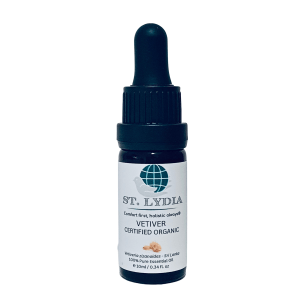
Vetiver Organic Essential Oil (Vetiveria zizanioides / Chrysopogon zizanioides) – Sri Lanka
Price range: €25.00 through €180.00Vetiver Organic Essential Oil (Vetiveria zizanioides / Chrysopogon zizanioides) – Sri Lanka
💰 VAT Included. 📦 Shipping calculated at checkout.
📦 🚚 Free nationwide delivery on orders over €60
Price range: €25.00 through €180.00 -
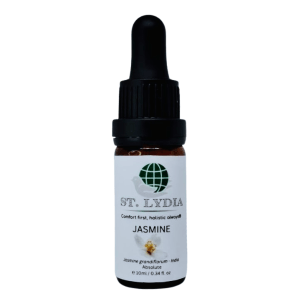
Jasmine Absolute (Jasmine grandiflorum) – India
Price range: €45.00 through €300.00Jasmine Absolute (Jasmine grandiflorum) – India
💰 VAT Included. 📦 Shipping calculated at checkout.
📦 🚚 Free nationwide delivery on orders over €60
Price range: €45.00 through €300.00 -
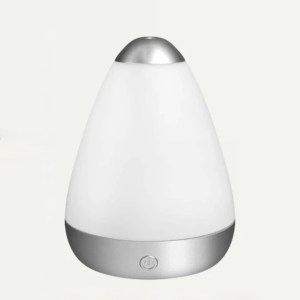
Ultrasonic Humidifier & Essential Oil Diffuser
€18.00Ultrasonic Humidifier & Essential Oil Diffuser
💰 VAT Included. 📦 Shipping calculated at checkout.
📦 🚚 Free nationwide delivery on orders over €60
€18.00 -
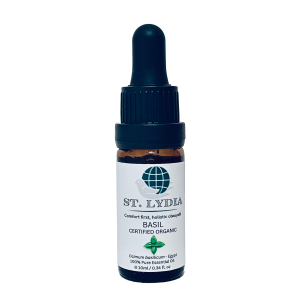
Basil Organic Essential Oil (Ocimum basilicum, ct. Methyl chavicol – Estragole) – Egypt
Price range: €10.00 through €77.00Basil Organic Essential Oil (Ocimum basilicum, ct. Methyl chavicol – Estragole) – Egypt
💰 VAT Included. 📦 Shipping calculated at checkout.
📦 🚚 Free nationwide delivery on orders over €60
Price range: €10.00 through €77.00
There are no reviews yet.