

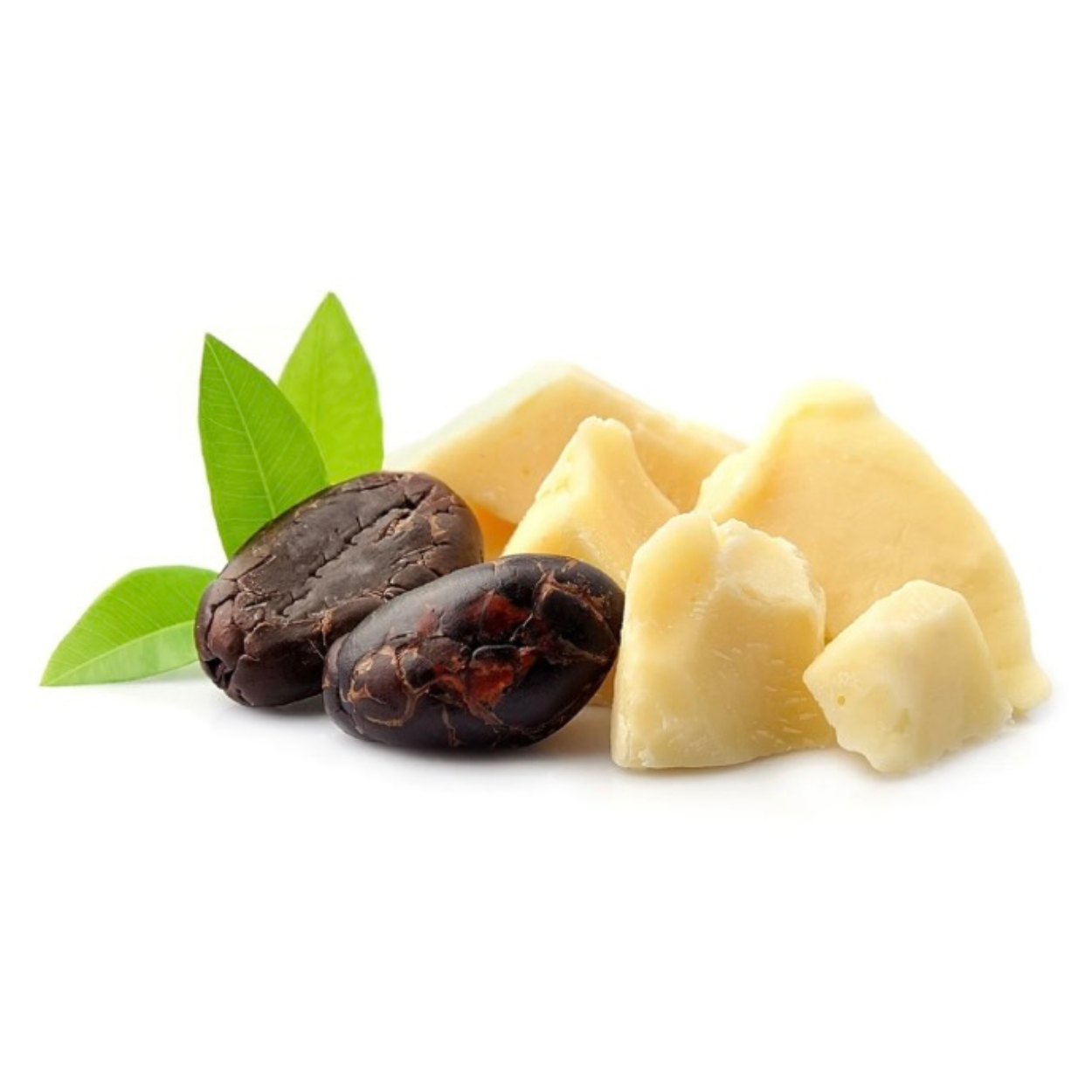


Cocoa Butter Refined (Theobroma cacao) – Ghana
€15.00
💰 VAT Included. 📦 Shipping calculated at checkout.
📦 🚚 Free nationwide delivery on orders over €60
Description
Cocoa Butter Refined
***Cocoa Butter Refined – History***
Cocoa butter refined, derived from the seeds (beans) of the cacao tree scientifically known as Theobroma cacao, has a rich and layered history that spans thousands of years, beginning with the ancient civilisations of Mesoamerica. Theobroma cacao is native to Central and South America, particularly the Amazon and Orinoco river basins. Its name, Theobroma, means “food of the gods” in Greek, reflecting its revered status among early cultures.
The Olmecs, (ancient Mesoamerican civilisation 1500–400 BCE) were the first to cultivate and use cacao, although primarily for its beans in beverage form rather than for butter extraction. The Maya and Aztecs (distinct Mesoamerican civilisations 250–1500 CE) used Cacao beans as currency and in sacred offerings. Beverages made from ground cacao were often mixed with spices and consumed during important ceremonies. While the primary use was in beverage form, the pressing of cacao beans for oil likely occurred in rudimentary ways.
In the 16th Century, after the Spanish conquest of the Aztec Empire, cacao was introduced to Europe. Cacao products, including cocoa butter, began to gain popularity, especially among the elite. However, cocoa butter was not yet widely extracted or used in its modern form. In the 19th Century, Coenraad Van Houten (1828), A Dutch chemist who invented a hydraulic press to extract fat (cocoa butter) from cacao beans. This marked a pivotal moment in the commercial use of cocoa butter. The separated cocoa solids became the basis for cocoa powder, while cocoa butter became important for chocolate production.
Cocoa butter began to be recognised not only for its culinary uses but also for medicinal and cosmetic purposes due to its smooth texture, pleasant aroma, and moisturising properties.
Cocoa butter refined is a smooth, ivory-coloured butter, gently processed to remove the strong chocolate scent and deep colour. It delivers all the skin-conditioning benefits of cocoa butter in a more neutral, versatile form—perfect for professional cosmetic and fragrance-sensitive formulations.
***Cocoa Butter Refined – Benefits***
Cocoa butter refined is rich in fatty acids like oleic and stearic acids that penetrate deeply to nourish and soften dry skin. It helps enhance skin suppleness, making it popular in stretch mark creams and anti-aging products. It is gentle and well-tolerated by most skin types; ideal for use on dry, irritated, or sensitive skin. Cocoa butter refined absorbs more cleanly than unrefined versions, making it suitable for daily lotions and creams. It creates a protective barrier to lock in moisture without clogging pores (though use cautiously on acne-prone areas).
Cocoa butter refined melts on contact with skin, offering excellent slip without leaving an overly greasy residue. It is ideal as a massage butter base, especially when paired with therapeutic essential oils. Cocoa butter refined lacks the strong scent and potential allergens of the unrefined version, making it suitable for sensitive people. It adds a luxurious, velvety finish to massages, enhancing client comfort and hydration.
Cocoa butter refined helps tame frizz, condition dry ends, and improve hair manageability. It forms a light layer on strands to protect against environmental stress and breakage. It soothes dry, flaky scalps when massaged in small amounts; non-irritating due to refined purity. It works well in hair masks, conditioners, and butters without overpowering natural or added fragrances.
Cocoa butter refined improves texture, spreadability, and richness in lip balms, foundations, and solid perfumes. It is ideal for formulations where fragrance and appearance consistency are essential. It adds body and stability to whipped products and emulsions like body creams, lotion bars, and salves.
✅ 100% Pure Body Butter – 250g
✅ Vegan-friendly and Cruelty-free
***Botanical Name*** Theobroma cacao
***Family*** Malvaceae (formerly Sterculiaceae)
***Origin*** Ghana
***Plant Part*** Seeds (Cocoa beans)
***Extraction Method*** Expeller Pressed – Refined to remove colour, odour and impurities.
***Aroma*** It is has a neutral to very faint cocoa scent due to refinement (unlike raw cocoa butter).
***Colour*** Pale yellow to ivory, solid at room temperature.
***Consistency*** Firm and dense at room temperature; melts easily upon skin contact.
***Absorption*** Absorbs more cleanly than unrefined versions.
***Composition Highlights*** Cocoa butter refined contains Stearic acid, Palmitic acid, Oleic acid, Linoleic acid, and Arachidic Acid. While these are the primary constituents, the butter may also contain minor components in smaller quantities, with major impacts.
***Storage Conditions*** Store Cocoa butter refined in a cool, dark place away from direct sunlight to prevent oxidation.
***Shelf Life*** 2 – 3 years
⚠️Caution⚠️ While Cocoa butter refined is generally safe, there are key cautions and considerations when using cocoa butter, especially given its refined nature:
- ***Skin Irritation*** Cocoa butter refined is considered safe for most people, but it may cause skin irritation or allergic reactions in some individuals, especially those with sensitive skin. It is best to patch test on a small area (e.g., on the inner arm) before applying to the face or body. Cocoa butter is considered moderately to highly comedogenic (rated around 4 on a 0–5 scale). It may clog pores, particularly on acne-prone or oily skin. Best avoided on the face for individuals prone to blackheads or breakouts. Excessive heat can degrade its natural antioxidants and alter its therapeutic value. Always melt cocoa butter gently using a double boiler or low-temperature methods to preserve its quality. Due to its rich, fatty nature, cocoa butter can stain clothing or fabrics. It can leave a greasy residue if over-applied, especially in warm climates. It is safe on most dry or irritated areas, but skip open wounds or raw skin unless guided by a dermatologist. Avoid contact with eyes, inner ears, and sensitive areas.
- ***Pregnancy and Nursing*** Cocoa butter refined is generally considered safe during pregnancy and breastfeeding, especially when used in small amounts, on intact skin, or as part of a routine for scars and stretch marks. Avoid application on the breast/nipple area if nursing, to prevent ingestion by baby. If blending with essential oils, always research each oil’s safety. If you’re ever unsure, run it by your healthcare provider — especially if you’re using cocoa butter on larger skin areas or planning to use them regularly.
- ***Children*** Topical use on children (especially over 2 years old) is generally considered safe in small amounts. However, because children’s skin is more permeable and more reactive, extra care must be taken. It is crucial to consult with a paediatrician or healthcare provider before using it, especially if a child has any underlying health conditions or is taking medications. A paediatrician can assess the child’s individual health needs and determine if cocoa butter is appropriate for use.
- ***Internal Use*** While food-grade cocoa butter is safe to eat, cosmetic-grade butters are not meant for ingestion. Never consume cocoa butter unless it is labeled as food-grade from reputable sources and consult with a healthcare professional before internal use.
- ***Medical Conditions*** Cocoa butter refined naturally contains trace amounts of caffeine and theobromine (methylxanthines). Though levels are very low in topical use, high sensitivity or skin absorption concerns may exist in individuals with arrhythmias, anxiety disorder and migraines. Avoid using large amounts over large areas in sensitive individuals. While cocoa butter is moisturising, it should not be used on broken skin or wounds without medical advice. May be helpful for dry skin, but not a substitute for medicated creams used in diabetic foot care. Cocoa butter refined does not have known systemic drug interactions when used topically. However, applying cocoa butter too close to medicated patches or creams (like hormone patches, pain-relief gels, or corticosteroids) may dilute or alter absorption, reduce medication efficacy. Some essential oil blends mixed with cocoa butter (like wintergreen or clove) may interact with anticoagulant / blood thinner use. It is crucial to consult a healthcare professional if unsure.
- ***Allergies*** Some individuals may experience allergic reactions to cocoa butter, symptoms may include skin irritation, itching, or rash. Always perform a patch test before widespread use, especially for those with known nut or seed allergies, or those sensitive to cacao, chocolate, or caffeine. Discontinue use if you experience any signs of an allergic reaction.
***Note*** Although body butters have a longstanding history of use and are valued for their potential benefits, individual experiences may vary.
Additional information
| Directions for Use – Solid Body Butter | How to Use: 1. Scoop a Small Amount:
2. Warm Between Palms:
3. Apply to Skin:
4. Let It Absorb:
|
|---|---|
| Body Butter Mixing Guide | Here's a body butter mixing guide to help you create a smooth, nourishing, and well-balanced blend: Basic Body Butter Formula (By Weight %) * 60-70% Butters (e.g., shea, cocoa, mango) * 20-30% Oils (e.g., sweet almond, jojoba, coconut, argan) * 5-10% Additives (optional) Step-by-Step Mixing Instructions 1. Measure Ingredients (by weight for accuracy) 2. Melt Butters & Oils 3. Cool & Thicken 4. Whip It (Optional for whipped body butter) 5. Add Final Ingredients 6. Jar & Label |
Related products
-
Frankincense Natural Essential Oil (Boswellia carterii) – Somalia
Price range: €18.00 through €140.00Frankincense Natural Essential Oil (Boswellia carterii) – Somalia
💰 VAT Included. 📦 Shipping calculated at checkout.
📦 🚚 Free nationwide delivery on orders over €60
Price range: €18.00 through €140.00 -
Geranium Organic Essential Oil (Pelargonium graveolens / Pelargonium asperum) – Egypt
Price range: €14.00 through €95.00Geranium Organic Essential Oil (Pelargonium graveolens / Pelargonium asperum) – Egypt
💰 VAT Included. 📦 Shipping calculated at checkout.
📦 🚚 Free nationwide delivery on orders over €60
Price range: €14.00 through €95.00 -
Rosemary Organic Essential Oil (Rosmarinus officinalis) – Spain
Price range: €9.00 through €70.00Rosemary Organic Essential Oil (Rosmarinus officinalis) – Spain
💰 VAT Included. 📦 Shipping calculated at checkout.
📦 🚚 Free nationwide delivery on orders over €60
Price range: €9.00 through €70.00 -
Peppermint Organic Essential Oil (Mentha x piperita) – India
Price range: €7.00 through €49.00Peppermint Organic Essential Oil (Mentha x piperita) – India
💰 VAT Included. 📦 Shipping calculated at checkout.
📦 🚚 Free nationwide delivery on orders over €60
Price range: €7.00 through €49.00

There are no reviews yet.